If you’re changing careers, don’t start by signing up for a random course. The best way to identify which skills to learn is to compare your current skills with the requirements of the jobs you want, find the gaps, and then prioritize the skills that have the biggest impact on getting hired.
A simple process looks like this:
Choose a target role → analyze real job descriptions → inventory your current skills → identify skill gaps → rank those gaps → build a focused learning plan.
You can also use AI to speed up the research and turn your findings into a personalized learning path. The important part is knowing what to ask for and verifying the recommendations against real job requirements.
Let’s walk through the process.
Step 1: Choose a Specific Career Target
“I’m leaving marketing” isn’t a career goal.
Neither is “I want to work in tech.”
Those statements are too broad to tell you what to learn.
Instead, choose a specific target role such as:
- Data analyst
- UX designer
- Product manager
- Digital marketing specialist
- Software developer
- Cybersecurity analyst
- Project coordinator
- Sales operations specialist
You don’t need to commit to that career forever. You simply need a specific destination so you can work backward from it.
Why specificity matters
Imagine you’re moving from customer service into tech.
Depending on your target, your learning priorities could be completely different.
Aiming for data analytics might require Excel, SQL, data visualization, and analytical thinking.
Aiming for UX design could require user research, wireframing, prototyping, and usability testing.
The career title determines the skills you need.
Step 2: Study Real Job Descriptions
This is one of the most valuable steps—and one people often skip.
Don’t build your learning plan from a generic “skills needed for X career” article. Look at actual job postings for the roles you want.
Collect around 15–30 relevant listings and look for repeated requirements.
Create categories such as:
| Skill category | What to look for |
|---|---|
| Technical skills | Software, platforms, programming languages |
| Business skills | Strategy, reporting, project management |
| Soft skills | Communication, collaboration, leadership |
| Tools | Excel, CRM systems, analytics tools, design software |
| Certifications | Credentials repeatedly requested |
| Experience | Projects, portfolios, industry exposure |
Pay particular attention to skills that appear repeatedly across companies.
One employer asking for a niche tool doesn’t necessarily mean you should spend three months mastering it.
A skill appearing in 15 out of 20 relevant job descriptions deserves much more attention.
Step 3: Create Your Current Skill Inventory
Now turn the analysis toward yourself.
Write down everything you can already do—not just skills you learned in school.
Your existing experience may be more valuable than you realize.
For example, someone moving from retail management into project coordination might already have experience with:
- Scheduling
- Team coordination
- Conflict resolution
- Performance tracking
- Customer communication
- Inventory management
- Problem-solving
Those aren’t “irrelevant” skills.
They’re potentially transferable skills.
Separate skills into three groups
Strong: You can perform the skill independently and have evidence to prove it.
Developing: You understand the basics but need more practice.
Missing: You have little or no experience.
This simple classification gives you the foundation for a useful skill-gap analysis.
Step 4: Identify Your Skill Gaps
A skill gap is simply the difference between what your target job requires and what you can currently demonstrate.
For example:
Target role: Junior Data Analyst
Current skills:
- Excel — Strong
- Communication — Strong
- Business reporting — Developing
- SQL — Missing
- Power BI — Missing
- Data visualization — Developing
Now the learning problem becomes much clearer.
You don’t need to “learn data analytics.”
You need to close specific gaps.
That distinction can save you a huge amount of time.
Step 5: Don’t Treat Every Skill Gap Equally
This is where many career changers go wrong.
They find 15 missing skills and try to learn all 15.
That’s usually a recipe for frustration.
Instead, rank each skill according to four questions:
1. How frequently is it requested?
If the skill appears across many relevant job listings, give it more weight.
2. How important is it to the job?
Some skills are listed as preferences. Others are fundamental to performing the role.
3. How difficult is it to learn?
A foundational skill may take weeks to develop. An advanced specialization could take months or years.
4. Can you prove it?
A skill becomes much more valuable when you can demonstrate it through a project, portfolio, certification, work example, or measurable result.
A useful priority formula is:
Priority = Job demand × Job importance × Career relevance ÷ Learning effort
You don’t need mathematically perfect numbers. The framework simply forces you to think about impact versus effort.
Step 6: Look for Transferable Skills Before Starting From Zero
Career changers often make one expensive assumption:
“Because I’m changing careers, I have to start from scratch.”
You probably don’t.
Your previous career may have given you skills employers in your target field already value.
For example:
Teacher → Corporate Learning & Development
Transferable skills might include:
- Presentation
- Curriculum design
- Communication
- Facilitation
- Assessment
- Audience engagement
Accountant → Business/Data Analyst
Potentially useful skills could include:
- Financial analysis
- Excel
- Reporting
- Attention to detail
- Data interpretation
- Business knowledge
Your goal isn’t to erase your previous career.
It’s to connect what you already know to where you’re going next.
Step 7: Use AI to Speed Up Skill-Gap Research
This is where AI can make the process much faster.
You can provide an AI tool with several job descriptions and ask it to identify:
- Repeated technical skills
- Frequently requested tools
- Common certifications
- Soft-skill requirements
- Entry-level versus advanced requirements
- Skills that appear most frequently
- Potential gaps in your current experience
You can then provide your own resume or skill inventory and ask it to compare the two.
But don’t blindly accept the results.
AI may misunderstand a job requirement, overestimate the importance of a skill, or recommend something that’s useful but not actually necessary for your target role.
Use AI as a research and planning assistant, not as the final authority.
Step 8: Build a Personalized Learning Path
Once you’ve identified your top skill gaps, put them in the right order.
For example, someone moving toward digital marketing might create a path like:
Stage 1: Marketing fundamentals
↓
Stage 2: SEO and keyword research
↓
Stage 3: Analytics
↓
Stage 4: Content strategy
↓
Stage 5: Campaign execution
↓
Stage 6: Portfolio projects
The order matters.
You don’t want to learn advanced analytics before understanding the marketing metrics you’re trying to analyze.
A personalized learning path should consider:
- Your current skill level
- Your target job
- Your available weekly hours
- Your deadline
- Your preferred learning style
- The skills employers actually request
That’s far more useful than simply collecting online courses.
Step 9: Learn Through Projects, Not Just Courses
Completing a course feels productive.
Being able to demonstrate what you learned is much more valuable.
For every major skill you learn, try to create something that proves you can use it.
Examples:
- Data analytics → Analyze a real dataset and create a dashboard
- UX design → Redesign an existing user flow and explain your decisions
- Digital marketing → Create a complete SEO/content strategy
- Project management → Build a project plan with milestones, risks, and resources
- Programming → Build a small functional application
Your project becomes evidence.
And evidence makes it easier to convince an employer that you’re ready for the transition.
Step 10: Reassess Your Skill Gaps Every Few Weeks
Your first learning plan shouldn’t be permanent.
As you learn, your priorities will change.
You may discover that:
- A skill is easier than expected.
- Another skill requires more practice.
- Employers care less about a certification than you thought.
- A portfolio project exposes another gap.
- Your preferred career path has changed.
Review your progress every 3–4 weeks.
Ask:
What can I do now that I couldn’t do before?
Then update your learning plan accordingly.
A Simple Career-Change Skill Gap Template
You can use this framework for almost any career transition:
Target role:
What exact position am I pursuing?
Top job requirements:
Which skills appear most frequently in relevant job postings?
Current strengths:
Which requirements can I already demonstrate?
Developing skills:
Which skills do I partially understand?
Missing skills:
Which requirements do I need to learn?
Priority skills:
Which three to five gaps will have the greatest impact?
Proof of ability:
What project, portfolio piece, certification, or experience can demonstrate each skill?
Learning deadline:
When do I want to be ready to apply?
This turns an overwhelming career change into a manageable project.
How SkillBoss AI Can Help
The hardest part of career development isn’t always learning.
Often, it’s figuring out what to learn in the first place.
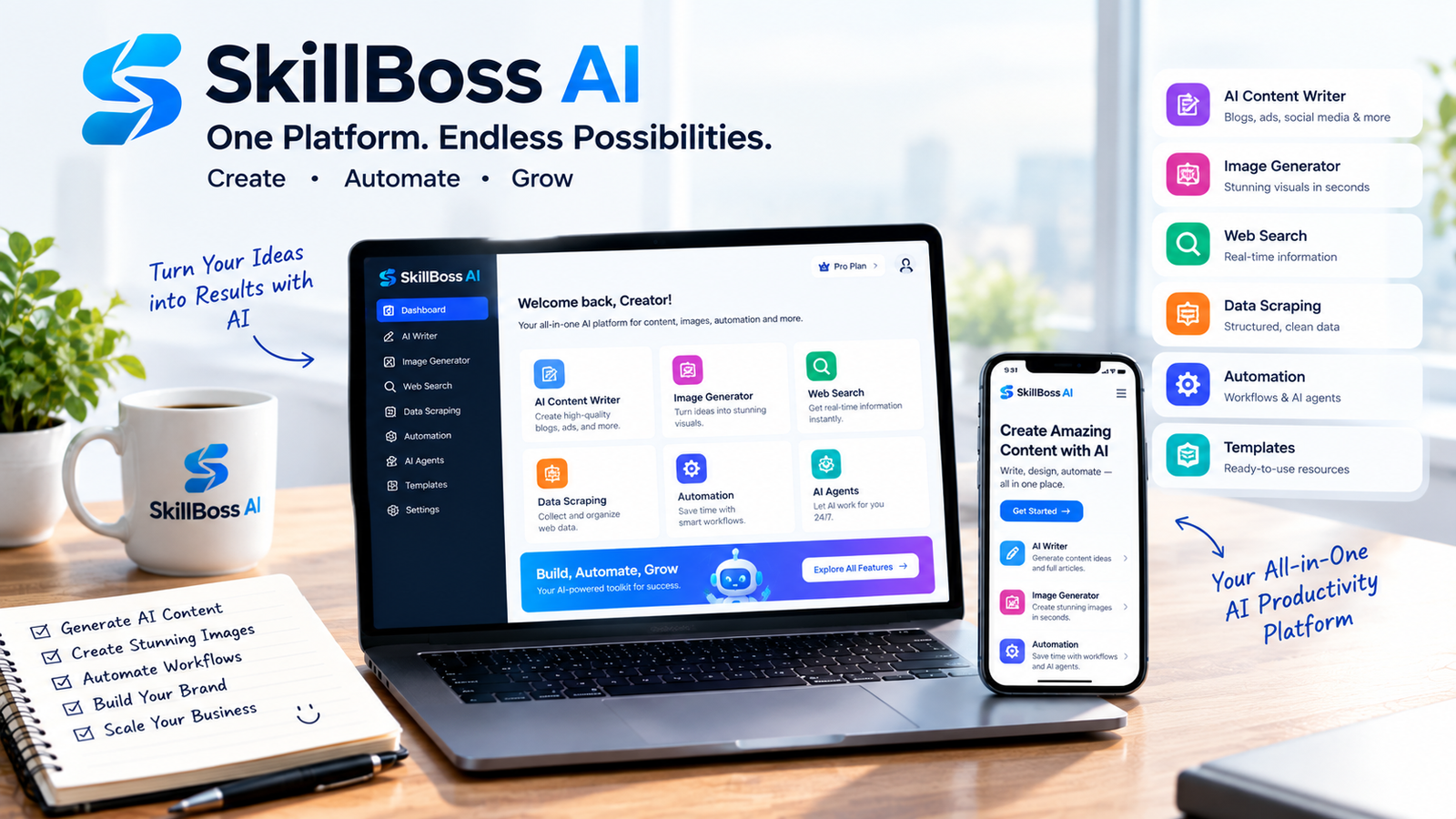
A personalized AI skill-development platform such as SkillBoss AI can help make that process more structured by connecting your career goals with skill assessment and personalized learning recommendations.
Instead of starting with a giant library of courses and asking, “Where do I begin?”, the better question is:
“What should I learn next based on where I am and where I want to go?”
That’s the question your learning plan should answer.
Your Career Change Doesn’t Need 20 New Skills
You don’t need to master everything before applying for your first role.
You need to identify the smallest set of high-impact skills that can move you meaningfully closer to your target career.
Start with the job you want. Study what employers actually ask for. Map those requirements against your existing abilities, prioritize the gaps, and build projects that prove your progress.
And if you’re using AI, let it do the repetitive research and planning—while you remain in control of the decisions.
A successful career change isn’t about learning more.
It’s about learning the right things, in the right order, for the right role.
